






Spotlights
Journeyman Electrician, Master Electrician, Residential Electrician, Commercial Electrician, Industrial Electrician, Electrical Technician, Wireman, Electrical Contractor, Maintenance Electrician, Solar Electrician, Electrical Apprentice, Low-Voltage Technician
Every time you flip a light switch, charge your phone, or plug in a video game console, you're relying on a system that an Electrician designed, installed, and made safe. Electricians are the professionals who bring power to life, wiring the homes we live in, the hospitals that keep people alive, the schools we learn in, and the factories that build everything around us. Without them, none of the modern world's electrical infrastructure would work, or would be safe to use at all.
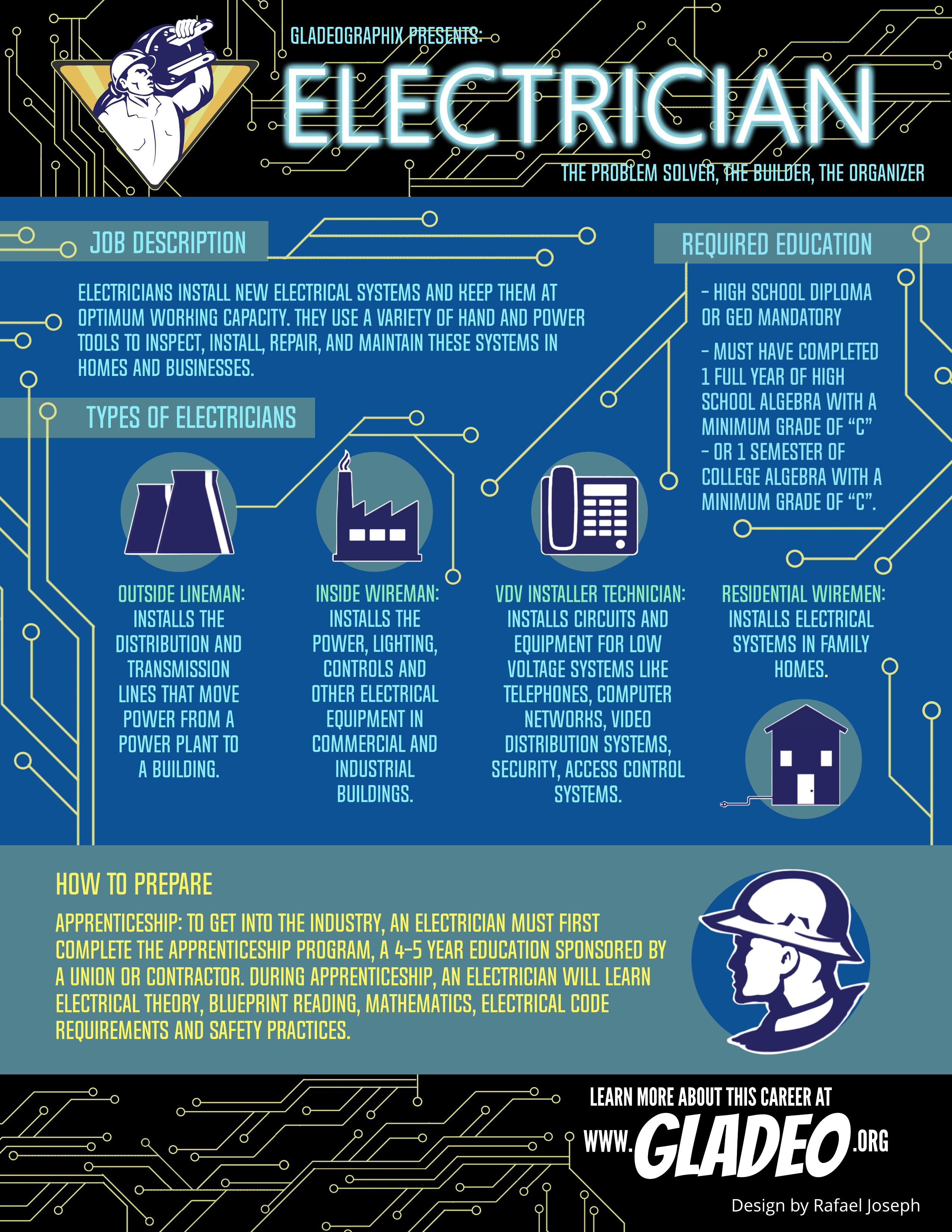
Electricians install, maintain, and repair the wiring, panels, outlets, and equipment that deliver electricity safely to buildings of every kind. They read blueprints and electrical code requirements, run conduit and wire through walls and ceilings, connect circuit breakers and panels, and troubleshoot problems when something isn't working right, from a tripped breaker to a full building power failure. On any given job, an electrician might work alongside general contractors, plumbers, HVAC technicians, and engineers, coordinating carefully so every trade's work fits together without conflict or danger.
Using tools like multimeters, wire strippers, conduit benders, and increasingly sophisticated diagnostic equipment, Electricians combine technical knowledge with sharp problem-solving skills and an unwavering respect for safety. Their work matters because electricity, when handled wrong, can be lethal or start a fire; when handled right, it powers homes, hospitals, schools, and the solar panels and EV chargers steering the country toward a cleaner energy future.
- Mastering a skilled trade that is essential, well-paid, and impossible to outsource overseas
- Solving real electrical puzzles that require sharp troubleshooting and hands-on problem-solving
- Playing a direct role in the clean-energy transition through solar and EV-charging installation work
- Having a clear path to becoming a licensed master electrician or running your own contracting business
Working Schedule
Most Electricians work full-time, and many put in more than 40 hours a week, especially those running their own business or working on time-sensitive construction projects. Residential and commercial electricians typically work standard daytime hours on job sites, while industrial and maintenance electricians may work rotating shifts, nights, or be on call for emergency repairs at manufacturing plants or hospitals that can't afford downtime. The work happens indoors and outdoors, in new construction, finished buildings, and sometimes tight or elevated spaces like attics, crawlspaces, and scaffolding. Many electricians are employed by electrical contracting firms, while others work for utility companies, manufacturers, or as independent licensed contractors.
Typical Duties
- Reading blueprints and electrical schematics to plan wiring layouts
- Installing conduit, wiring, outlets, switches, and lighting fixtures
- Connecting and installing circuit breaker panels and electrical service equipment
- Testing electrical systems and components using multimeters and other diagnostic tools
- Troubleshooting and repairing faulty wiring, outages, and malfunctioning equipment
- Installing and wiring solar panel systems and battery storage
- Installing electric vehicle charging stations in homes and businesses
- Ensuring all work complies with the National Electrical Code and local regulations
- Inspecting electrical systems for safety hazards and code violations
- Upgrading older electrical systems to handle modern power demands
- Collaborating with other trades to coordinate wiring around plumbing, HVAC, and structural work
- Maintaining accurate records of work performed and materials used
Additional Responsibilities
- Estimating material and labor costs for electrical jobs
- Training and supervising apprentices on job sites
- Ordering and managing electrical supplies and equipment
- Responding to emergency service calls for power outages or hazards
- Staying current on updates to the National Electrical Code
- Obtaining and renewing required electrical licenses and permits
- Communicating with clients, contractors, and inspectors about project status
- Maintaining and calibrating testing and diagnostic equipment
An Electrician's day often starts by reviewing the job list, gathering the tools, wire, and materials needed, and heading to the job site or first service call. On a construction site, mornings might involve running conduit and pulling wire through framed walls before drywall goes up, working from blueprints to make sure every outlet and switch lands exactly where it belongs. On a service call, the morning might instead start with diagnosing why a homeowner's breaker keeps tripping.
Midday work often shifts to installing devices: outlets, switches, light fixtures, panels, or specialized equipment like EV chargers and solar inverters. Electricians test every connection carefully with a multimeter before energizing a circuit, since a mistake can be dangerous. They also coordinate with other trades on-site, making sure their wiring runs don't conflict with plumbing or ductwork going in around the same time.
Afternoons often bring troubleshooting calls, code inspections, or finishing touches on a job, like labeling panels and walking a client or contractor through the completed work. Electricians document what they did, restock their truck for the next day, and, for those who own their business, may spend evening time on estimates, invoicing, and scheduling upcoming jobs.
Soft Skills
- Sharp problem-solving and troubleshooting ability
- Strong attention to detail and safety awareness
- Physical stamina and comfort working in tight or elevated spaces
- Clear communication with clients, contractors, and inspectors
- Patience and precision under time pressure
- Reliability and professionalism on job sites and in customer homes
- Ability to read and interpret technical diagrams
- Teamwork and coordination with other trades
- Calm decision-making in potentially hazardous situations
- Willingness to keep learning as codes and technology evolve
- Time management across multiple jobs or service calls
- Basic business and customer service skills for independent contractors
Technical Skills
- Reading blueprints, schematics, and electrical diagrams
- Deep knowledge of the National Electrical Code and local building codes
- Wiring installation, including conduit bending and cable pulling
- Use of multimeters, voltage testers, and circuit tracers
- Panel and circuit breaker installation and troubleshooting
- Solar photovoltaic system wiring and battery storage installation
- Electric vehicle charging station installation
- Motor controls and industrial electrical systems for those in manufacturing settings
- Low-voltage and smart home wiring systems
- Basic math for load calculations and material estimating
- Residential Electrician: Wires homes, from new construction to renovations and repairs
- Commercial Electrician: Handles wiring for offices, retail stores, and other business spaces
- Industrial Electrician: Maintains and repairs electrical systems in factories and plants
- Maintenance Electrician: Keeps existing electrical systems in buildings running safely
- Solar Electrician: Specializes in installing and wiring solar panel and battery systems
- Low-Voltage Electrician: Installs data, security, and smart home wiring systems
- Line Electrician (Lineworker): Works on high-voltage power lines for utility companies
- Electrical Inspector: Reviews completed electrical work for code compliance and safety
- Electrical contracting companies
- Utility companies and power providers
- Manufacturing plants and industrial facilities
- General construction and homebuilding companies
- Hospitals and healthcare facilities
- Solar and renewable energy installation companies
- Government agencies and public works departments
- School districts and university facilities departments
- Data centers and telecommunications companies
- Independent, self-employed electrical contracting businesses
- Property management and facilities maintenance companies
- Shipbuilding and marine electrical companies
Electrical work carries real physical risk. Electricians must follow strict safety procedures every single time, because a lapse in attention around live wiring can cause serious injury or worse. This means the job demands constant focus, discipline, and respect for procedure, even when a task feels routine.
The schedule can be demanding. Construction deadlines, emergency service calls, and on-call maintenance shifts for industrial or hospital settings mean electricians sometimes work nights, weekends, or long hours to keep critical systems running. The physical demands are real too: climbing ladders, working in cramped attics or crawlspaces, and standing for long stretches all take a toll over a career.
Licensing requirements also mean a multi-year commitment before reaching full earning potential. Apprentices typically spend four to five years working under supervision and studying code before qualifying for a journeyman license, and further experience is needed to become a master electrician. It's a long runway, but one that leads to strong, stable pay and real independence.
- Rapid growth in residential and commercial solar panel installation
- Surging demand for electric vehicle charging infrastructure at homes and businesses
- Expansion of battery storage systems paired with solar and backup power
- Growth of smart home and building automation wiring
- Increased demand for electricians as the power grid modernizes and expands
- Rising need for electricians trained in data center and server farm power systems
- Growth in microgrid and renewable energy projects requiring specialized electrical skills
- Continued updates to the National Electrical Code around EV charging and solar
- Use of thermal imaging and advanced diagnostic tools for troubleshooting
- Strong demand tied to infrastructure investment and grid modernization efforts
Many Electricians grew up curious about how things worked, taking apart old electronics, wiring simple circuits for school science projects, or helping a parent with home repairs. They often enjoyed hands-on building activities, from model kits to helping fix things around the house, and liked understanding the "why" behind how a device or system functioned.
Others found their spark in shop class, robotics clubs, or video games and toys involving circuits and electronics. A combination of curiosity about electricity, comfort with math and problem-solving, and satisfaction from fixing something that was broken often pointed these future electricians toward the trade.
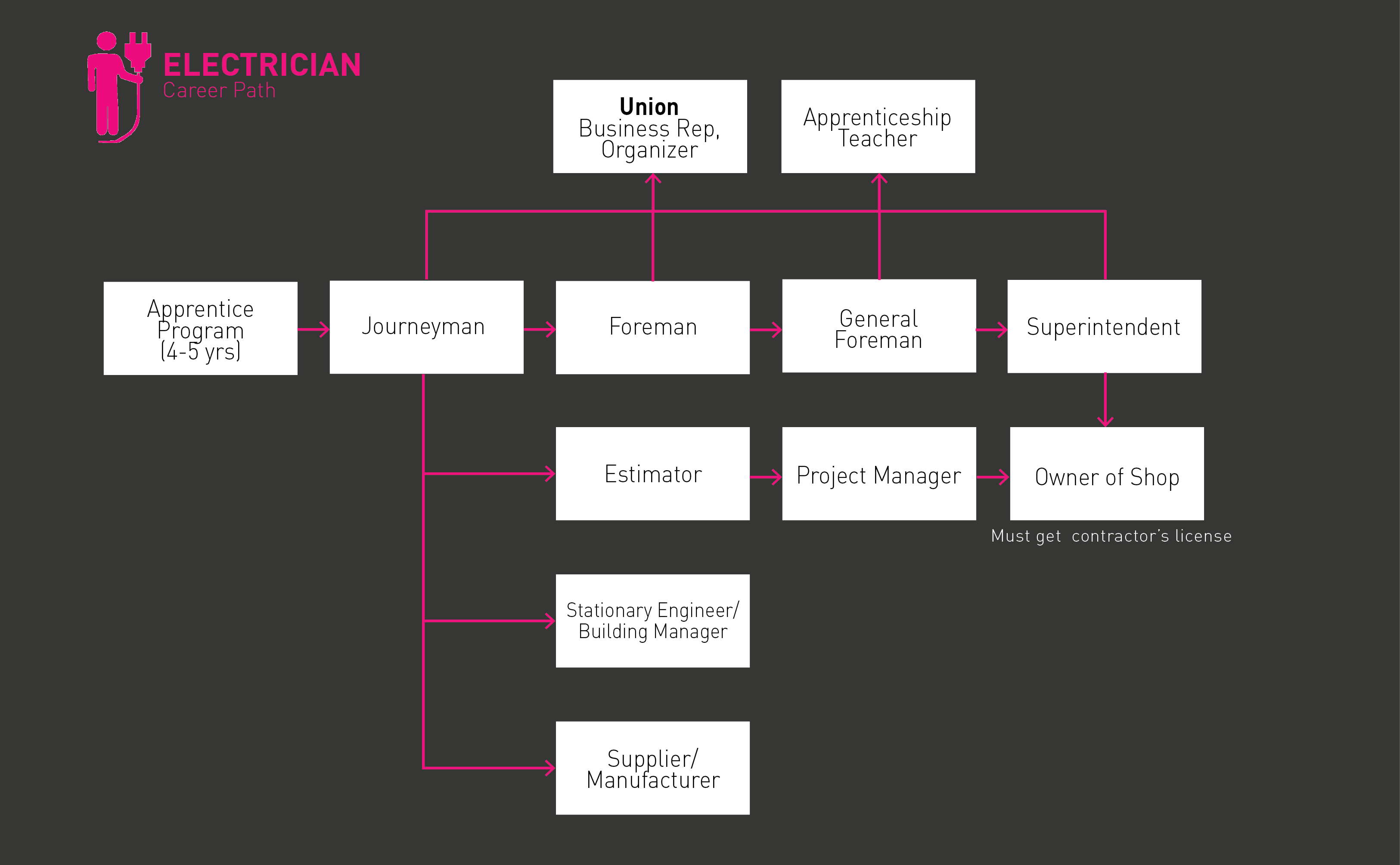
Most Electricians enter the field through a registered apprenticeship, combining paid on-the-job training with classroom instruction over four to five years. Apprenticeships are sponsored by unions like the International Brotherhood of Electrical Workers (IBEW), independent contractor associations, or trade schools, and typically require a high school diploma and passing an aptitude test to get in. After completing an apprenticeship and accumulating enough work hours, electricians take a licensing exam to become a journeyman electrician, and additional years of experience plus another exam lead to a master electrician license in most states.
Students can take courses in relevant subjects such as:
- Electrical Theory and Circuits
- National Electrical Code (NEC)
- Blueprint Reading
- Algebra and Applied Math
- Physics
- AC/DC Electrical Systems
- Motor Controls
- Solar and Renewable Energy Systems
- Occupational Safety (OSHA standards)
- Construction Technology
Getting into a strong apprenticeship program is often more valuable than any classroom credential, since paid hands-on training under a licensed electrician is how the trade is truly learned. Building a track record of reliability and safety consciousness during an apprenticeship strongly influences whether a contractor keeps someone on and helps them advance. Many electricians also pursue specialized certifications in areas like solar installation or low-voltage systems to expand their opportunities.
- Take algebra, geometry, and physics to build a strong math and science foundation
- Enroll in electrical, shop, or construction technology classes if available
- Join a trades-focused club like SkillsUSA to build hands-on experience
- Research local IBEW or independent electrical apprenticeship programs and their requirements
- Ask to shadow a licensed electrician for a day to see the work firsthand
- Practice basic wiring projects at home under safe, supervised conditions
- Study for and take apprenticeship aptitude tests, which often cover math and reading comprehension
- Get comfortable reading diagrams, schematics, and technical instructions
- Volunteer or work part-time in construction-adjacent jobs to build site experience
- Learn about OSHA safety standards and general job site safety practices
- Attend a trade or career fair focused on the skilled trades
- Talk to electricians about apprenticeship life and the realities of the trade
- Registered apprenticeship programs recognized by the Department of Labor
- Strong track record of graduates passing the journeyman licensing exam
- A mix of hands-on lab work and classroom code instruction
- Instructors who are licensed, practicing electricians
- Union-affiliated programs offering structured pay progression during training
- Coverage of both residential and commercial/industrial electrical systems
- Growing curriculum coverage of solar, battery storage, and EV charging
- Reasonable program cost, since many apprenticeships are paid rather than tuition-based
- Job placement support and relationships with local contractors
- Safety-first culture with rigorous OSHA training
- Flexible scheduling that accommodates full-time on-the-job training
- Opportunities to specialize later in low-voltage, industrial, or solar work
- Apply to registered apprenticeship programs through IBEW, ABC, or local trade schools
- Pass the apprenticeship aptitude test by practicing math and reading comprehension beforehand
- Apply directly to electrical contracting companies for helper or pre-apprentice positions
- Search job boards and union hiring halls for apprentice electrician openings
- Highlight any construction, mechanical, or hands-on experience on your resume
- Network with electricians, contractors, and instructors who may know about openings
- Prepare to discuss your interest in the trade and long-term commitment during interviews
- Be ready to demonstrate basic tool knowledge and safety awareness
- Consider starting as a laborer on electrical job sites to get a foot in the door
- Research wages and benefits across different apprenticeship sponsors before committing
- Show up early, work hard, and take feedback well; apprenticeships are as much about attitude as aptitude
- Keep detailed logs of your training hours, which are required for licensing exams
- Complete your apprenticeship hours and pass the journeyman licensing exam
- Gain experience across residential, commercial, and industrial settings to broaden your skill set
- Pursue specialized certifications in solar, EV charging, or industrial controls
- Build a reputation for safe, code-compliant, high-quality work
- Study for and earn your master electrician license after sufficient experience
- Take on leadership roles supervising apprentices and smaller crews
- Consider becoming a licensed electrical contractor and starting your own business
- Stay current on code updates and new technologies through continuing education
Websites:
- International Brotherhood of Electrical Workers (IBEW) - ibew.org
- National Electrical Contractors Association (NECA) - necanet.org
- Independent Electrical Contractors (IEC) - ieci.org
- Associated Builders and Contractors (ABC) - abc.org
- National Fire Protection Association (NEC/NFPA 70) - nfpa.org
- Electrical Training Alliance - electricaltrainingalliance.org
- SkillsUSA - skillsusa.org
- National Association of State Contractors Licensing Agencies - nascla.org
- Solar Energy Industries Association (SEIA) - seia.org
- Electrical Contractor Magazine - ecmag.org
- OSHA Training Institute - osha.gov
- Mike Holt Enterprises (NEC training) - mikeholt.com
Books:
- Electrical Wiring Residential by Ray C. Mullin and Phil Simmons
- Wiring Simplified by Frederic P. Hartwell
- Ugly's Electrical References by Ugly's Electrical References Inc.
- American Electricians' Handbook by Terrell Croft and Wilford Summers
- National Electrical Code Handbook by National Fire Protection Association
If you find that being an Electrician isn't the right path for you, there are many related careers where your technical skills and problem-solving ability can shine.
- HVAC Technician
- Solar Panel Installer
- Elevator Installer and Repairer
- Electrical Engineering Technician
- Telecommunications Technician
- Industrial Maintenance Technician
- Electrical Inspector
- Instrumentation Technician
- Fire Alarm Systems Technician
- Wind Turbine Technician
Newsfeed

Featured Jobs
Online Courses and Tools
Annual Salary Expectations
New workers start around $62K. Median pay is $79K per year. Highly experienced workers can earn around $106K.
Annual Salary Expectations
New workers start around $73K. Median pay is $109K per year. Highly experienced workers can earn around $144K.
Annual Salary Expectations
New workers start around $53K. Median pay is $76K per year. Highly experienced workers can earn around $100K.